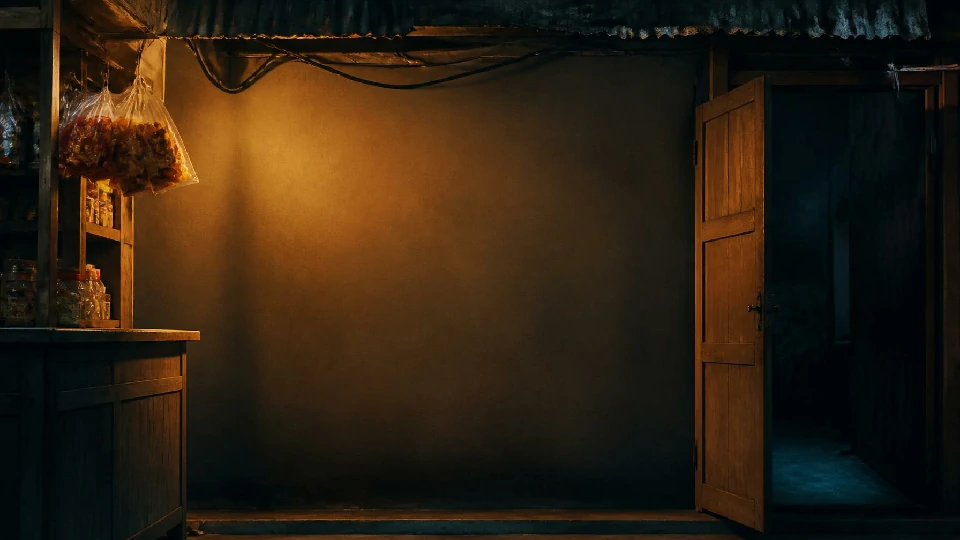
✶ the till ✶
Narinig Mo Ba? Money & ShopPeso Denominations, Prices, Manual Change, and the KASYO Calculator
Money in Narinig Mo Ba? is a contradiction: you handle a stream of pesos behind the counter all day, and you never get to keep any of it. This page explains the whole money side of the game — the bills and coins you actually use, how a sale runs, the prices the store shows, the change you build by hand, and the little calculator on the counter. It also covers what the game deliberately does not have, because there is no real economy here.
what sits in the till
The Peso Denominations
The seven denominations
Every transaction runs on seven denominations. The bills are the ₱50, ₱100, ₱200, and ₱1000 notes; the coins are the ₱5, ₱10, and ₱20 pieces. These sit on the counter in front of you, and they are the only money you ever handle.
A note on what is missing: smaller coins — the ₱1 and below — don't appear in the game at all. If a price ends in an awkward figure, the game still works within these seven denominations, and the math of making change always stays inside them.
the five steps
How a Sale Works
A sale follows the same five steps every time:
The routine
- A customer orders an item.
- You pick the item from the shelves, the hanging rack, or the fridge.
- The customer hands you money.
- You build the change by hand from the bills and coins on the counter.
- You hand over the item (and the change, when it applies).
Everything is mouse clicks — there is no keyboard, no auto-calc, and no cash register button that does the math for you. The customer's payment and your change are the whole transaction.
the readable tags
The Price Tags
Items carry price tags, and the game shows a handful of them clearly:
Coffee
₱10
Sanitary pad / napkin
₱7
Ice bag
₱5
Bottled water
₱10
That is the full list of prices the game actually shows. The rest of the catalog is not priced on screen, and the game publishes no complete price list — so the other items are simply not priced publicly rather than estimated. For the story, the exact figures barely matter; for the routine, the only prices that appear in the named scenes are the ones above.
the one skill
Building Change by Hand
The one skill
Making change is the one skill the game asks of you. When a customer pays, you assemble the change yourself: you click or drag the right combination of bills and coins from the counter and hand it over. You are free to build the amount in any combination the seven denominations allow — there is no requirement to use the fewest pieces, and the game does not enforce any particular way of counting.
Hand over the wrong amount and nothing goes wrong — the transaction is forgiving, and you simply correct yourself and move on. It is worth taking the moment to count anyway, because the money is the only thing in the game that asks you to think.
upper-right of the counter
The KASYO Calculator
The KASYO
On the upper-right of the counter sits a small electronic calculator — a physical object you can click and press. Its brand name, KASYO, echoes Casio (a nod to the Filipino calculator brands you actually find in sari-sari stores). Its job is to help you do the arithmetic of a sale: working out a total, or more often, the change you owe.
It is genuinely meant to be used, not decoration. But it is a helper, not a requirement — you can do the math in your head, and the game never checks how you arrived at the amount, only that the sale proceeds.
the honest list
What the Economy Isn't
The most honest thing to say about Narinig Mo Ba?'s money is what it is not:
No wallet
You never accumulate a balance. Money passes through the counter and leaves.
No inventory or restocking
The shelves never run out, and you never buy stock.
No end-of-day summary
No daily earnings, no profit-and-loss, no totals to chase.
No costs
There is no wholesale price or margin anywhere in the game.
No credit system for the player
The debts that matter in the story — Junjun's Paluwagan payments — belong to the characters, not to your shop. You never keep a ledger of who owes you.
The money system is a stage prop with a working routine: it makes serving customers feel real, and it frames the story's debt-and-desperation themes. It is not a simulation of running a business.
don't do these
Common Mistakes to Avoid
Expecting your money to accumulate
It never does. There is no balance, no savings, and nothing to buy.
Looking for inventory or restocking
The shelves are fixed for the whole game; you never manage stock.
Assuming a full price list exists
Only four prices are shown (coffee ₱10, pads ₱7, ice ₱5, water ₱10). The rest are not published.
Worrying about wrong change
There's no penalty for a miscounted exchange — the game lets you correct and continue.
Treating the KASYO calculator as decoration
It is clickable and meant to be used for the arithmetic, even if it is not mandatory.
before you ask
Money & Shop FAQ
Seven: ₱50, ₱100, ₱200 and ₱1000 bills, plus ₱5, ₱10 and ₱20 coins. Smaller coins do not appear.
Order → pick the item → take the money → build the change by hand → hand everything over. All mouse clicks.
Only four are shown: coffee ₱10, sanitary pad ₱7, ice bag ₱5, and bottled water ₱10. The rest are not documented.
By clicking or dragging bills and coins from the counter in any combination of the seven denominations. There's no penalty for getting it wrong.
A clickable electronic calculator on the counter (the brand name echoes Casio) used to work out totals and change. It is optional.
No. No wallet, no inventory, no restocking, no daily summary, and no costs — the money system exists to serve transactions and story, not to be managed.