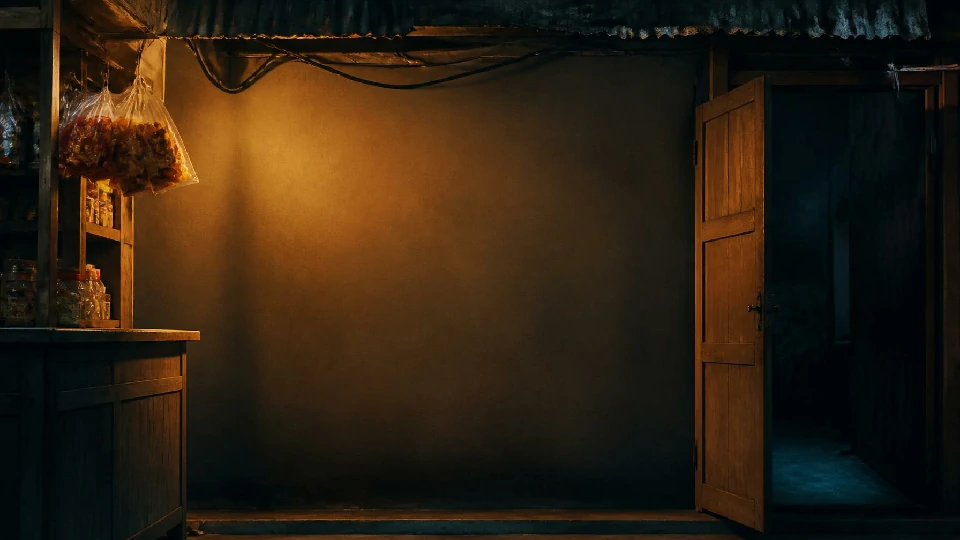
✶ the stock list ✶
Narinig Mo Ba? Itemsthe Full Product List, Shelf Locations, Prices, and What Each Purchase Means
Every shelf item in Narinig Mo Ba? looks like an ordinary store's stock — coffee, canned goods, candy, eggs. But in this game, what someone buys is part of the story: the coffee means a debt, the eggs mean a lie, the vegetables mean something watching. This page lists every product seen in the store, where each one sits on the shelves, the prices the game actually shows, and who buys what.
the stock list
What the Store Actually Sells
The sari-sari store carries a neighborhood convenience stock. These are the products the store actually sells:
Stock on hand
| Product | Where it lives | Known price |
|---|---|---|
| Coffee / black coffee | Hanging rack | ₱10 |
| Instant noodles | Middle shelves | — |
| Canned goods | Middle shelves | — |
| Candy / snacks | Hanging rack | — |
| Cigarettes | Around the counter | — |
| Eggs | Shelves | — |
| Vegetables | Shelves | — |
| Sanitary pads / napkins | Hanging rack | ₱7 |
| Ice bags | Fridge | ₱5 |
| Toilet paper / tissues | Shelves | — |
| Bleach / detergent | Shelves | — |
| Bottled beer | Lower shelves | — |
| Canned / bottled drinks | Lower shelves + fridge | — |
| Bottled water | Fridge | ₱10 |
One honest note: the shelves may hold a few more items than any single run happens to show, so treat this as a working list rather than an official exhaustive catalog.
four zones
Where Each Item Lives
If you are trying to grab the right item fast, the store is organized into four zones:
The hanging rack
Holds the small items: coffee, candy, and sanitary pads.
The middle shelves
Hold the pantry goods: snacks, canned goods, and instant noodles.
The lower shelves
Hold the bigger bottles: bottled beer and large drinks.
The fridge
Holds the cold stuff: ice bags, chilled canned and bottled drinks, and bottled water.
The eggs and vegetables sit on the shelves like the rest of the pantry goods. Everything you need for a customer's order is in one of these four places, and the game keeps the layout fixed across all six days.
the readable tags
What Things Cost
The store shows price tags, but only a few prices are clearly readable or mentioned in dialogue:
Coffee
₱10
Sanitary pad / napkin
₱7
Ice bag
₱5
Bottled water
₱10
The rest of the catalog is not priced on screen, and the game never publishes a full price list — so the other items are simply not priced publicly rather than guessed. What matters in practice is not the exact amounts but the change you build by hand, since every sale runs through the same take-the-money-and-build-change routine.
the story in the orders
Who Buys What
The purchases are where the items earn their place in the story. Some are tied to named characters and specific days:
The ledger of orders
| Item | Buyer | When | What it means |
|---|---|---|---|
| Coffee / black coffee | Junjun | Day 1, Day 2 | The debt conversation — how much he owes, his search for work |
| Eggs | Lucia | Day 3 | “Preparing food for my daughter Lea” — the quiet denial that unsettles the day |
| Vegetables | Axel | Day 4 | The sweet line about eating vegetables, followed by the wrong shadow |
| Candy / snacks | Axel | Repeatedly | The neighborhood kid's usual purchases |
| Sanitary pads | Leila | A later day | An ordinary regular's errand |
| Ice bags | Malu | A later day | An ordinary purchase — from a name that also appears in the Paluwagan ledger |
The rest of the stock — noodles, canned goods, cigarettes, beer, cleaning supplies — is bought by unnamed regulars and stays in the background. It exists to make the store feel real, but it carries no story weight.
three things
What Items Actually Do
Three things, in order of importance:
01 · They are the transaction
Every customer order runs through the items: the customer asks for something, you pick it from the shelves, take the money, and build the change by hand. This is the game's core loop, and the items are the goods moving through it.
02 · They are the story hooks
The named purchases above are deliberate: Junjun's coffee frames the debt that gets him killed, Lucia's eggs frame the lie she tells about her daughter, Axel's vegetables frame the shadow that appears behind him. If you know who buys what, you already know where the story is pointing.
03 · They have no economy
There is no inventory system, no restocking, no personal money goal, and no end-of-day sales summary. You never accumulate anything from selling — the money leaves the counter as fast as it arrives, and the items never build into a resource. The store is a stage for transactions and conversations, not a shop you manage.
don't do these
Common Mistakes to Avoid
Looking for an inventory or restocking system
There is none. The shelves are fixed, and you never manage stock.
Expecting a full price list
Only four prices are shown (coffee ₱10, sanitary pads ₱7, ice ₱5, water ₱10). The rest are not documented anywhere.
Thinking purchases change the ending
They do not. The game has one fixed story; the items are props for that story, not choices that fork it.
Grabbing items freely
You take an item because a customer ordered it. The store is not a free-grab sandbox.
before you ask
Items FAQ
A neighborhood convenience stock: coffee, noodles, canned goods, candy, cigarettes, eggs, vegetables, sanitary pads, ice, tissues, cleaning supplies, beer, drinks, and bottled water.
Four zones: the hanging rack (coffee, candy, pads), middle shelves (snacks, canned goods, noodles), lower shelves (beer, big drinks), and the fridge (ice, chilled drinks, water).
Only four are shown: coffee ₱10, sanitary pad ₱7, ice bag ₱5, and bottled water ₱10. The rest are not published.
Yes — they are the transaction goods of the core loop, and the named purchases (coffee, eggs, vegetables) are story hooks tied to characters.
No. No inventory, no restocking, no money goal, no end-of-day summary. The items are a stage for transactions and story, not a managed resource.